The Environmental Impact Of The Holiday Season
Written by: Gianna Hector
Edited by: Ailin Bogers
The holiday seasons, which include festivities such as Christmas, Hanukkah, Diwali, and New Year's Eve, are meant to be a time of generosity, family gatherings, and cultural traditions. However, these days, the true meanings of many festivals are overshadowed by a consumerist undertone and significant environmental harm. During these periods, patterns of consumption, travel, energy usage, and waste production all increase tenfold, exacerbating pollution, greenhouse gas emissions, and the depletion of resources. If people, communities, and lawmakers are to balance festivity with sustainability, they must first comprehend the environmental consequences of the holiday season.
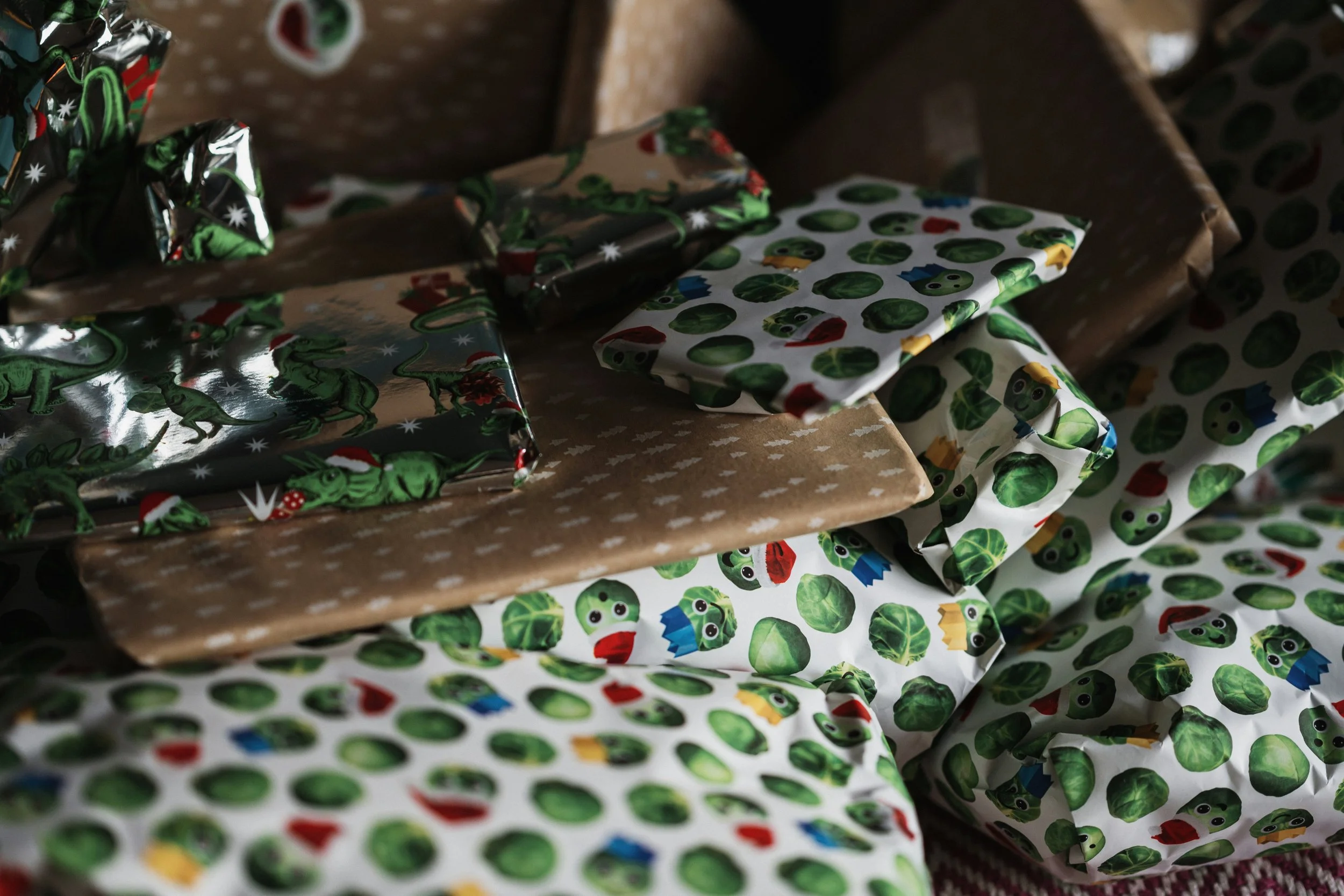
The increase in waste during the holiday seasons is one of the most obvious environmental issues. In many countries, household waste rises drastically throughout December and the beginning of January. A large portion of this is packing materials such as plastic wrap, bubble wrap, cardboard boxes and decorative paper. Although some of these materials are considered recyclable, the additional glitter coatings, mixed materials and contamination frequently hinder successful recycling. Consequently large amounts of trash end up in landfills, where organic materials break down anaerobically (without oxygen) and produce methane, a greenhouse gas far more harmful to the environment than carbon dioxide over a span of 100 years (United States Environmental Protection Agency, 2023). Another significant problem is food waste. Festive meals are usually bigger and more complex than regular meals, a pattern of overindulgence that ultimately results in excess and waste. The Food and Agriculture Organization of the United Nations (2011) claims that when food waste is handled incorrectly, its environmental impact extends beyond the loss of precious resources like water and land, but also directly contributes to methane emissions.
The holiday seasons also see an enormous increase in energy use. The rise in demand for electricity is partially due to the increased usage of electrical devices, extended indoor heating and ornamental lighting. The shift to LED lighting has lessened this strain in many areas, however, the impact of millions of homes utilizing ornamental lighting is still considerable. The International Energy Agency (2022) emphasized that fossil fuels are still a significant source of electricity generation in many places, meaning that greater seasonal demand inevitably results in more carbon emissions. Similarly, holiday travel comes with a huge price tag for the planet. During holidays, there is an increase in air travel, lengthy car trips and the use of public transit. The Intergovernmental Panel on Climate Change (2021) highlighted transport's disproportionately large contribution to global greenhouse gas emissions per passenger kilometer, with aviation as a particularly fast growing source of emissions.
Commercial holidays like Cyber Monday and Black Friday, which come before many winter holidays, promote an unsustainable consumer culture. These buying festivals promote excessive buying, especially of non-essential items. The environmental consequences of this consumption extend beyond the moment of purchase. Raw materials, water and energy are required for the manufacturing of toys, electronics, apparel, and ornaments, which often come at the cost of water pollution, soil degradation, loss of habitats and even human suffering. The production of textiles for fast fashion, especially, requires a large amount of water and chemicals. According to the Ellen MacArthur Foundation (2017), the fashion business is responsible for a large portion of the world's carbon emissions and water usage, and many articles of apparel are only worn a few times before being discarded. The environmental impact of such products increases when they are purchased as seasonal presents and then thrown away.
The issue of real Christmas trees versus fake ones serves as an additional example of the intricacy of the environmental effects associated with the holidays. Real trees need land, water and agricultural inputs for their growth, but they are also biodegradable and may be composted or shredded into mulch. Due to production and international shipping, synthetic trees, which are often composed of polyvinyl chloride (PVC) and metal, have a bigger initial carbon footprint. But their environmental effect per year may lessen if they are used repeatedly over several years. According to life cycle assessments, consumer actions like reuse and disposal methods are major determinants of the sustainability of either alternative (Carbon Trust, 2018). This illustration highlights the importance of taking into account the entire life cycle of a product, instead of focusing on particular phases of manufacturing or disposal.
The environmental effect of the holiday season has increased due to the development of e-commerce. Demand for delivery services is driven by online shopping, which frequently leads to numerous small deliveries as opposed to a single larger purchase. Additional waste streams are generated by packing materials such as single-use plastics and protective fillers. Furthermore, high return rates for goods, mostly in clothing and electronics, can double transportation emissions and occasionally result in returned products being thrown away rather than resold. According to the World Economic Forum (2020), the expansion of e-commerce may make traffic and pollution worse in cities during busy shopping seasons unless there are major advances in packaging design and delivery methods.

The holiday season doesn't have to be detrimental to the environment. Mitigation possibilities can be found at the level of individuals, businesses and regulations. By selecting recyclable or reusable wrapping materials, organizing meals to minimize food waste and composting organic scraps where facilities are available, families can avoid generating excess waste. Choosing experience-based gifts, such as tickets to events or charitable contributions, as well as choosing long lasting, high-quality items, may help people concentrate less on material purchases. Using timers to restrict running hours and switching to LED lighting can lower energy consumption. Additionally, using public transportation, carpooling, or offsetting emissions for long-distance travel will help lower the seasonal carbon footprint.
Businesses and governments have a role to play at a higher level. Retailers have the option to change package design to improve recyclability and use fewer materials. Investing in renewable energy can help prevent the increased seasonal electricity demand from resulting in more carbon emissions. Promoting circular economy practices and waste reduction in policies can address systemic inefficiencies, while public awareness campaigns can promote sustainable consumer behavior. Organizations like the Ellen MacArthur Foundation (2017) promote the circular economy by calling for products designed with durability, repairability, and reuse in mind in order to lessen the environmental impact of our consumption, even beyond the holiday season.
Overall, the holiday season has a complex environmental impact due to an increase in travel, energy usage, waste generation, and consumption. Although holidays like New Year's Eve, Christmas, Diwali, and Hanukkah have significant cultural and personal value, their environmental effects merit careful consideration. It is possible to maintain the spirit of the holidays while lessening their environmental impact by implementing more sustainable behaviors at the individual and systemic levels. In the face of dwindling resources and climate change worldwide, it's imperative to strike a balance between tradition and environmental sustainability.
References:
Carbon Trust (2018) Cutting carbon in the festive season. London: Carbon Trust.
Diverse Daily (2024) Carbon footprint of electronics: The impact of manufacturing, using, and disposing of electronic devices. Available at:https://diversedaily.com/carbon-footprint-of-electronics-the-impact-of-manufacturing-using-and-disposing-of-electronic-devices/
Ellen MacArthur Foundation (2017) A new textiles economy: Redesigning fashion’s future. Cowes: Ellen MacArthur Foundation.
Food and Agriculture Organization of the United Nations (2011) Global food losses and food waste: Extent, causes and prevention. Rome: FAO.
Hillman Curtis (2025) Electronics production: Understanding the manufacturing process. Available at:https://hillmancurtis.com/electronics-production-understanding-the-manufacturing-process/
Intergovernmental Panel on Climate Change (2021) Sixth Assessment Report: Climate Change 2021 – The Physical Science Basis. Geneva: IPCC.
International Energy Agency (2022) World Energy Outlook 2022. Paris: IEA.
The Toy Coach (2024) Everything you want to know about the world of toy manufacturing. Available at:https://www.thetoycoach.com/blog/everything-you-want-to-know-about-world-of-toy-manufacturing
United States Environmental Protection Agency (2023) Basic information about landfill gas. Washington, DC: EPA.
World Economic Forum (2020) The future of the last-mile ecosystem. Geneva: World Economic Forum.
