Lessons of Adaptation and Resilience From The Past
Written by: Lalla Masondo
Edited by: Beatrice Bos
We’ve all heard of present-day climate change, but it’s not the first time that an event like this has threatened species on Earth. Our planet has experienced numerous climatic changes in her lifetime: some of them led to mass extinction, but not all of them were deadly. In fact, our predecessors trailed the very same path we walk today, facing climatic conditions that seemed unbearable and inevitably fatal. However, despite these challenges our ancestors were able to adapt. Not all hope is lost for humanity today: the stories of the past can offer guidance and lead us to solutions to the climate crisis. Through a thorough examination of these civilizations, we can discover new and possibly familiar ways of building climate resilience in a much needed time of action.
Adaptation strategies of antiquity: The African Continent
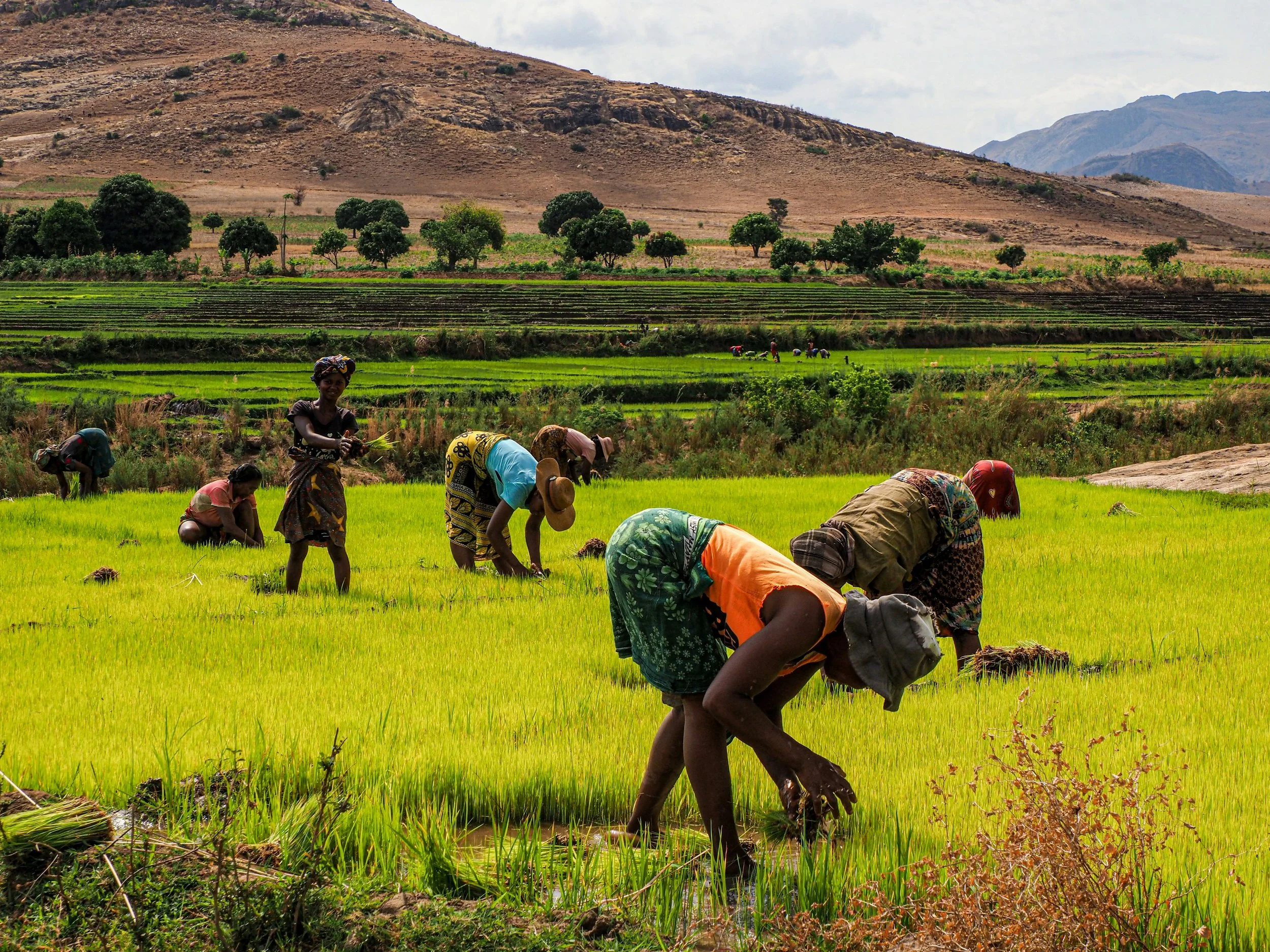
Agriculture played a significant role in the functioning of societies in the past, specifically in relation to food security and trade. Naturally, droughts and floods were of great concern, prompting resilience and adaptation strategies to be implemented with the goal of protecting crops from dying out and to maintain societal structure. Because agriculture formed the backbone of ancient society, adaptation to natural disasters was necessary to not only guarantee the survival of ancient humans, but also to allow their societies to continue to thrive. Archeological records show key evidence of these strategies across the globe, but in this article we will specifically focus on those of the African continent.
The end of the African Humid Period marked the beginning of dry, desert-like conditions, a great contrast to the wetter conditions that characterized the continent before this change. To cope with these new, unfamiliar conditions, communities took a new and more sustainable approach to agriculture and animal-farming. In the southern regions, livestock herding and wild food gathering were combined alongside small-scale farming (Phelps and Douglass, 2025). Further north, communities practiced mixed-crop farming, growing a variety of crops together. The practice of growing different crops, such as wheat, legumes and barley, at once was adopted in order to promote the health of the crops, which, being grown together, mutually helped the other species thrive. This was also combined with fishing, dairy collection and beer brewing (Phelps and Douglass, 2025). The sharing of land, knowledge and resources was also an important part of these adaptation strategies. The role of community became essential not only for the development, but also the sustainment of these management strategies, with each member in the community actively contributing to holding these methods in place. Through shared effort, communities were therefore able to survive this dry period without compromising on food security, community and social structure.
The Stratagies
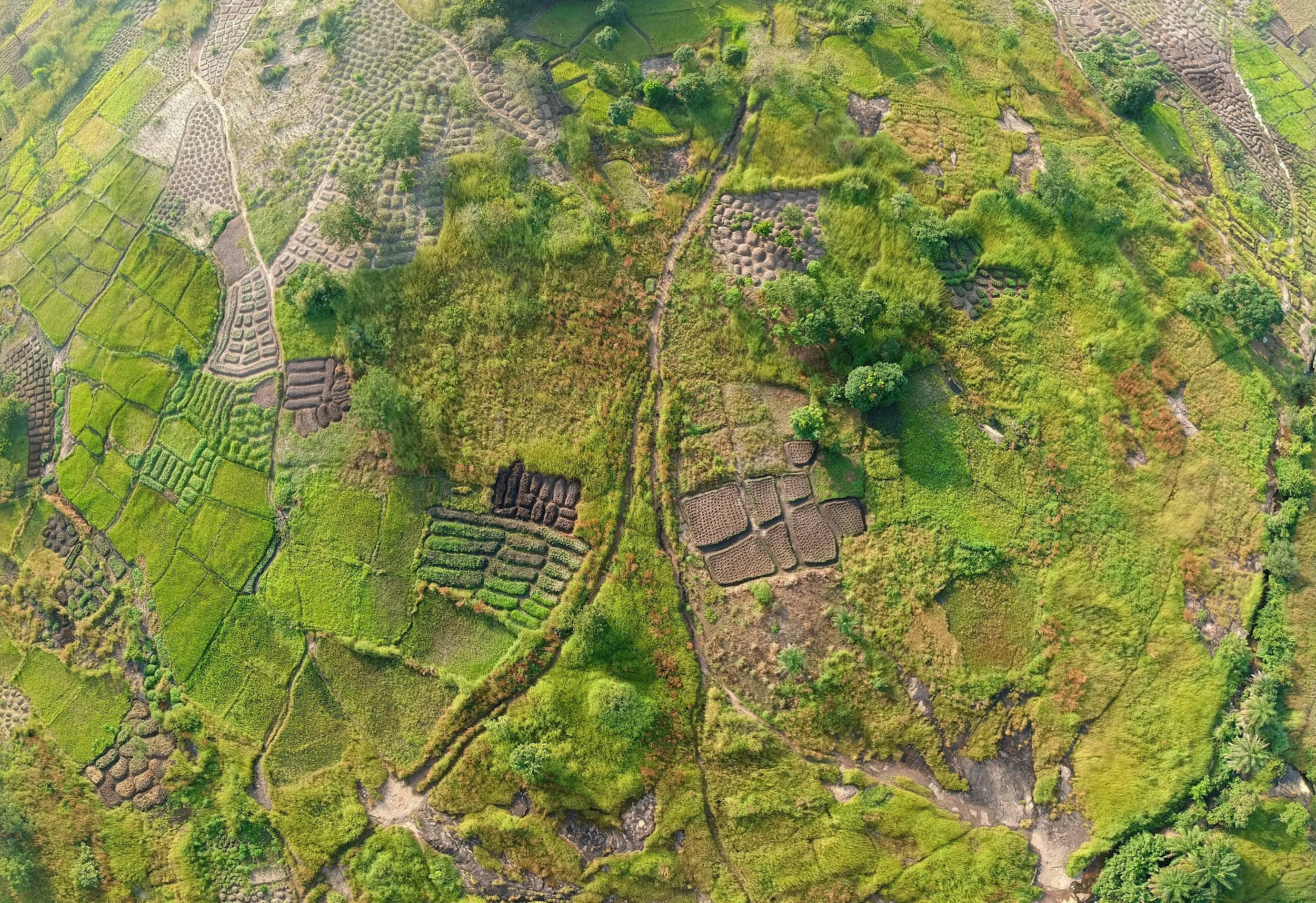
There are three key strategies featured in the above text that hold relevance for contemporary society. Beginning with the use of mixed-crop farming over traditional mono-crop farming, we will analyze the adaptation techniques used by ancient African societies to draw inspiration from those who survived climate changes in the past. Mono-crop farming is the practice of planting and farming a single crop over an area of land over the years. This practice uses large amounts of energy on a singular type of crop over acres of land, compromising soil quality and energy-efficiency. While more cost-effective to manage, its drawbacks heavily compromise the sustainability of this approach. On the other hand, mixed-crop farming allows for a variety of crop yields whilst reducing soil erosion and improving soil thanks to legume crops. This technique is more time-consuming in comparison with the first, but it offers more sustainability benefits opposed to traditional monoculture farming.
The importance of community as an adaptation strategy is also evident in the given example. No real change can occur in isolation, and the ancients knew this very well. Knowledge sharing from a diverse group of minds can help evolve adaptation strategies, making them not only more sustainable, but more specific to the cultural and environment context of where they will be implemented. Because of this, ancient societies struggling in front of harsh climate conditions centered the sharing of knowledge and resources, which allowed them to develop solutions that worked in the context in which they were needed. This emphasizes another key factor in climate resilience: the utmost importance of creating solutions that remain in line with needs of the communities and spaces in which they are enacted.
The study referenced in the example distinctly highlights two regional adaptation strategies, one in Southern Africa and the other in Northern Africa. This highlights another important factor to keep in mind when implementing reliance strategies: cultural and environmental context must be at the center of those strategies. Different regions, though both experiencing a drier period, experience this effect differently, as biomes, ecosystems and plant diversity were very different between the two areas. Oftentimes the natural environment and the culture of the people that inhabit those ecosystems are deeply intertwined, therefore it is fundamental to note that resilience strategies are not just preserving agricultural or ecological land, but ancestral land as well.
Conclusion
The past is not only a place of deep fascination but also a source of knowledge. Civilisations that existed before us were not immune to climatic shifts, and yet they found ways to adapt and sustain their livelihoods in spite of such shifts. From this we can learn and do the same. Climate resilience needs community, context and sustainable practices to concretely mold a sustainable future. Through inspired action, let us build a history where future historians will look towards with inspiration, just as we now look towards the past.
References & Further Reading:
Climate Adaptation Platform (2025). Climate Adaptation and Resilience Lessons in Africa’s History - Climate Adaptation Platform. [online] Climate Adaptation Platform. Available at: https://climateadaptationplatform.com/climate-adaptation-and-resilience-lessons-in-africas-history/.
d’Alpoim Guedes, J.A., Crabtree, S.A., Bocinsky, R.K. and Kohler, T.A. (2016). Twenty-first century approaches to ancient problems: Climate and society. Proceedings of the National Academy of Sciences, [online] 113(51), pp.14483–14491. doi:https://doi.org/10.1073/pnas.1616188113.
Degroot, D., Anchukaitis, K.J., Tierney, J.E., Riede, F., Manica, A., Moesswilde, E. and Gauthier, N. (2022). The history of climate and society: a review of the influence of climate change on the human past. Environmental Research Letters, 17(10), p.103001. doi:https://doi.org/10.1088/1748-9326/ac8faa.
Erdogan, K. (2025). How ancient desert communities adapted to climate change - Türkiye Today. [online] Türkiye Today. Available at: https://www.turkiyetoday.com/culture/how-ancient-desert-communities-adapted-to-climate-change-3202942.
Fisher, C. (2024). What ancient farmers can really teach us about adapting to climate change – and how political power influences success or failure. [online] University of South Carolina. Available at: https://sc.edu/uofsc/posts/2024/03/ancient-farmers-climate-change.php.
Grainsa and RhinoReloaded (2020). The pros & cons of INTERCROPPING. [online] The pros & cons of INTERCROPPING. Available at: https://www.grainsa.co.za/the-pros--cons-of-intercropping.
Nguyen, L. (2021). Forever changes: Climate lessons from ancient Egypt. [online] YaleNews. Available at: https://news.yale.edu/2021/08/02/forever-changes-climate-lessons-ancient-egypt.
Phelps, L.N., Davis, D.S., Chen, J.C., Monroe, S., Mangut, C., Lehmann, C.E.R. and Douglass, K. (2025). Africa-wide diversification of livelihood strategies: Isotopic insights into Holocene human adaptations to climate change. One Earth, [online] 8(6), p.101304. doi:https://doi.org/10.1016/j.oneear.2025.101304.
Phelps, L.N. and Douglass, K.G. (2025). Africans survived 10,000 years of climate changes by adapting food systems — study offers lessons for modern times. [online] Down To Earth. Available at: https://www.downtoearth.org.in/africa/africans-survived-10000-years-of-climate-changes-by-adapting-food-systems-study-offers-lessons-for-modern-times.
Weiberg, E. and Finné, M. (2018). Resilience and persistence of ancient societies in the face of climate change: a case study from Late Bronze Age Peloponnese. World Archaeology, 50(4), pp.584–602. doi:https://doi.org/10.1080/00438243.2018.1515035.
