Building a Healthier World: Addressing Climate and Public Health Together
Written by: Ailin Bogers
Edited by: Beatrice Bos, Gianna Hector
In today’s world, there is an abundance of challenges and crises to tackle, and it can seem overwhelming for both the individual and the collective to know where to begin. The reality is that these crises are not independent of one another: they are tightly interwoven. The climate and the public health crisis are two of the most urgent emergencies that we are dealing with as a society today. The global mean temperature is just shy of the 1.5 degrees threshold stated in the Paris Agreement, yet aligned global action remains wobbly and uncoordinated. On the other hand, global public health challenges are multifaceted and complex, constituting a whirlwind of lifestyle factors, systemic inequalities and environmental factors. Despite these crises seeming unrelated, there can be no real success in tackling one of these difficulties without addressing the other. Instead, efforts must go towards determining the interconnectedness of these issues and understanding what actions have the most potential for lasting impact.
How is the Climate Crisis threatening our health?
The climate crisis has been identified as this century’s most significant public health threat. The role that environmental factors play in health is often overlooked or misunderstood, and their impact is consequently left out of the conversation. There are three main ways in which the climate crisis is affecting our health;
The climate crisis is causing increased frequency and intensity of extreme weather events, which directly threaten the physical and mental health of those impacted. Climate disasters such as storms and flooding can result in significant physical injuries in the affected community, but also mental trauma associated with these experiences. Wildfires and heatwaves, both made more likely by the climate crisis, are especially dangerous for those already vulnerable with underlying health conditions.
The climate crisis’s effect on our planet’s life-supporting system will severely reduce livelihood, including changes such as rising sea levels, reduced freshwater availability and food shortage. A warming climate also facilitates the spread of infectious diseases, particularly vector-borne diseases such as malaria and dengue fever.
The climate crisis will interact with existing social determinants of health and exacerbate inequities in public health. This includes but is not limited to outcomes such as loss of livelihood, reduced access to food and fuel, or worse, conflict and forced migration.
Why a “win” for the climate is a “win” for public health
The connection between the climate crisis and public health provides an opportunity to reevaluate the way that we view the social and environmental determinants of health. Human well-being is intrinsically dependent on the health of the planet and its ecosystems. Better planetary health will lead to better public health; at the same time, many efforts to improve public health can go in the direction of mitigating the climate crisis.
Several straightforward strategies are ensured to provide benefits both in the health and climate sectors. For example, transport accounts for a large proportion of global greenhouse emissions and is a major cause of air pollution and physical inactivity. In the UK, ill health related to air pollution is estimated to cost between £8.5 billion and £20.2 billion, whilst physical inactivity is estimated to contribute to 1 in 6 deaths directly. Encouraging people to walk, cycle or take public transport when possible can help address both health and climate issues. Tackling issues related to unhealthy eating can also lead towards a more sustainable approach: encouraging the adoption of a diet rich in plant-based and whole foods could alleviate the burden of non-communicable diseases on our healthcare systems and reduce the environmental impact of food production.
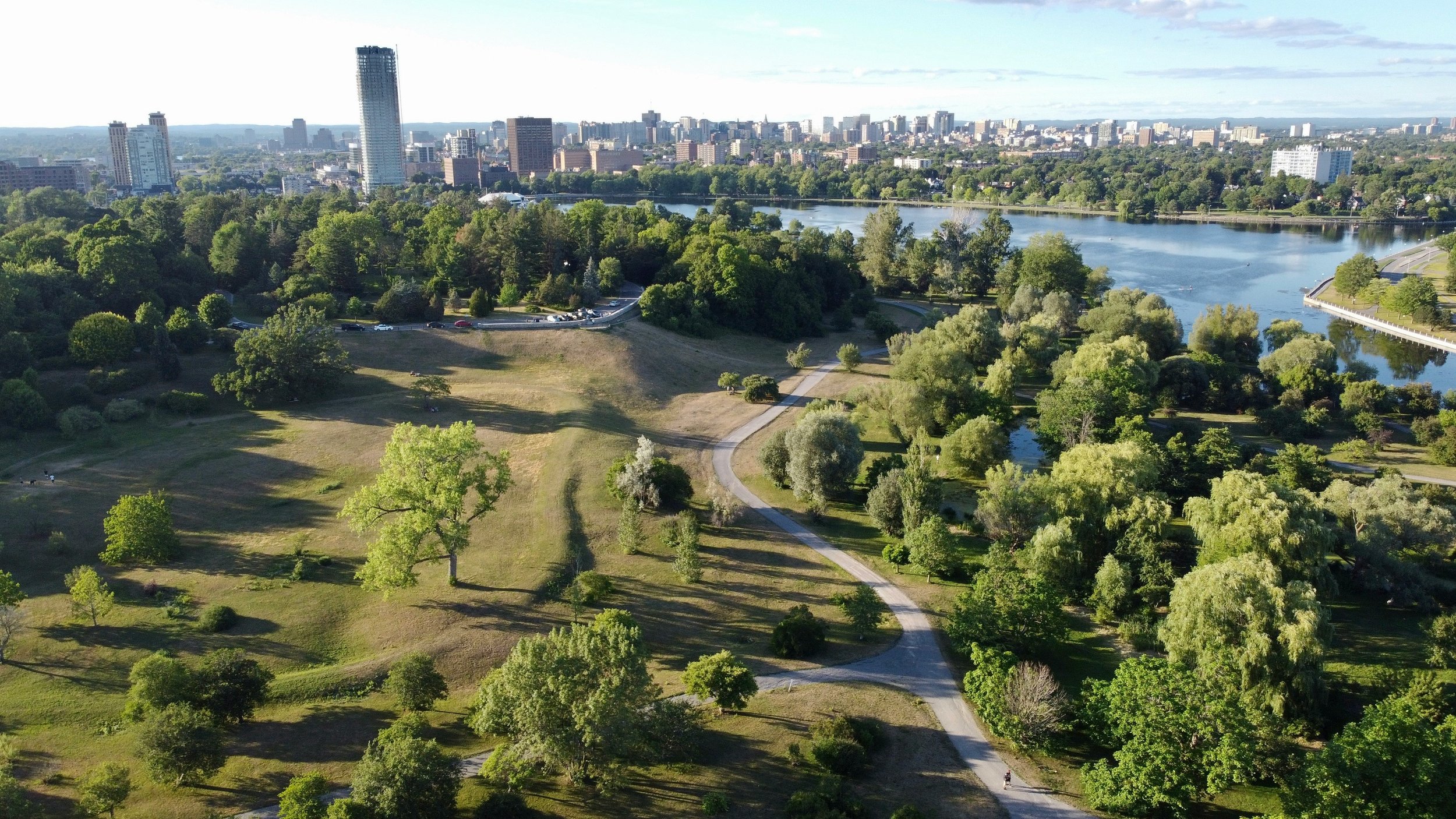
An example of this interconnected systems thinking is already being showcased in Baranquilla, Colombia. The city has introduced green spaces as part of its strategy to improve air quality and promote physical exercise, and 93% of residents are now able to reach a park within an 8-minute walk. Beyond its environmental and physical health benefits, green spaces also improve mental well-being and bring communities together.

Adding social and health inequity to the picture
When both climate and public health crises occur within the context of vast social injustice, a series of additional factors must be taken into consideration. The climate crisis affects everyone’s well-being, but vulnerable communities are going to be impacted at a much larger scale. Communities in the Global South already experience worse public health outcomes; at the same time, they are also more vulnerable to the impacts of climate change. Whilst contributing very little to greenhouse gas emissions, these communities face much higher health risks as a result of climate disasters and loss of livelihood. On top of this, people coming from a lower socio-economic background, ethnic minority groups, and disabled people are more likely to live in communities with worse air pollution. They also face more difficulty accessing green spaces, healthcare facilities and healthy food options.
Healthy People + Healthy Planet = Healthy World
The climate crisis is encroaching on all aspects of our lives: it is affecting our health, our environment and the way we live. Only when we learn to see this connection can we begin to work out the solutions for building a healthier world. Presently, climate and health policies are often developed in silo, unaware of the impacts that could be had if they joined forces and built solutions that benefited health and climate at once. However, it is vital that, on a global scale, health policies take into account the varying impacts of the climate crisis that communities face. Climate-vulnerable communities and nations are also the ones with the most underdeveloped health policies and healthcare systems. We must consider these when building a healthier world to ensure that existing inequities are not exacerbated and that people and the climate can thrive together in every corner of the planet.
References
Clean Air Fund and Vital Strategies (2023) Real-world solutions for clean air and health: Six city examples to inspire action on urban air pollution. Available at: https://static1.squarespace.com/static/651ac816acd03355c91d9e93/t/6638857a9e768817c5eaa531/1714980238179/CaseStudyBooklet.pdf.
English, S. (2023). Addressing racism in climate change and health. In: Why we need to talk about health and climate: an essay collection. [online] Green Alliance. Available at: https://green-alliance.org.uk/wp-content/uploads/2023/10/Health-and-climate-essays.pdf [Accessed 30 Jan. 2026].
Green Alliance (2024). Climate change and public health» Green Alliance. [online] Green Alliance. Available at: https://green-alliance.org.uk/project/climate-change-and-public-health/.
Office for Health Improvements and Disparties (2022). Climate and health: applying All Our Health. [online] GOV.UK. Available at: https://www.gov.uk/government/publications/climate-change-applying-all-our-health/climate-and-health-applying-all-our-health#why-it-matters.
Lucero‐Prisno, D.E., Shomuyiwa, D.O., M. B. N. Kouwenhoven, Thinley Dorji, Yusuff Adebayo Adebisi, Odey, G.O., George, N.S., Ajayi, O.T., Olabode Ekerin, Manirambona, E., Xu, L., Obnial, J.C., Viola, A.M., Ogunkola, I.O., Ahmed, M.M., Ogaya, J.B., Huang, J., Sium, A.F., Lester, M. and Chung, W.K. (2024). Top 10 Public Health Challenges for 2024: Charting a New Direction for Global Health Security. Public Health Challenges, 4(1). doi:https://doi.org/10.1002/puh2.70022.
Marten, R., Yangchen, S., Campbell-Lendrum, D., Prats, E.V., Neira, M.P. and Ghaffar, A. (2020). Climate change: an urgent priority for health policy and systems research. Health Policy and Planning, 36(2), pp.218–220. doi:https://doi.org/10.1093/heapol/czaa165.
WHO Regional Office for Europe (2017) Environmentally sustainable health systems: a strategic document. Copenhagen: WHO Regional Office for Europe. Available at: https://iris.who.int/server/api/core/bitstreams/c1835c8f-4167-4804-a0b4-77d6dfa8a097/content.
